The prompt and the river
Two highlights from my first CHI: what users actually want from system prompts, and the idol-makers of Kolkata who spend months on a goddess the river takes in a day.
I went to my first CHI two weeks ago: the biggest human-computer interaction conference in the world, this year in Barcelona, a metro ride from my flat, so I could experience it fully. My two highlights and reflections below.
Who Controls the Conversation? (Neumann, Pi and Singh) asks what users want from system prompts: the instructions a builder writes into the model before the user types anything. The authors collected 1,309 real system prompts, built a taxonomy of what they contain, then surveyed 109 users.
The data is very precise, and useful. 89% want some transparency into the prompt. 79% want influence over it. 8% want to write it themselves. The rest prefer saved preferences, pre-set choices, or a system that quietly adapts.
Users want the wheel. Almost nobody wants the engine.
That gap is the design brief for anyone building agents right now. I had been searching for a principle that balances transparency, control and cognitive load, and this is the closest I have found: capture intent in conversation, compile it into the prompt behind the scenes, and show the machinery only when someone asks. The user steers in their own words. The interface is the prompt engineer. This is the pattern I see emerging across products.
The other paper has no AI in it. Making the Sacred (Mim, Upadhyay, Paul and Chakraborty) is a four-month ethnography of Kumartuli, the neighbourhood of Kolkata where artisans sculpt the goddess Durga. An idol takes months: a bamboo frame, straw, clay dug from the riverbank, pigment, ornament. Then Durga Puja arrives, the goddess is worshipped for a week, and on the last day she is carried back to the river and given to the water.
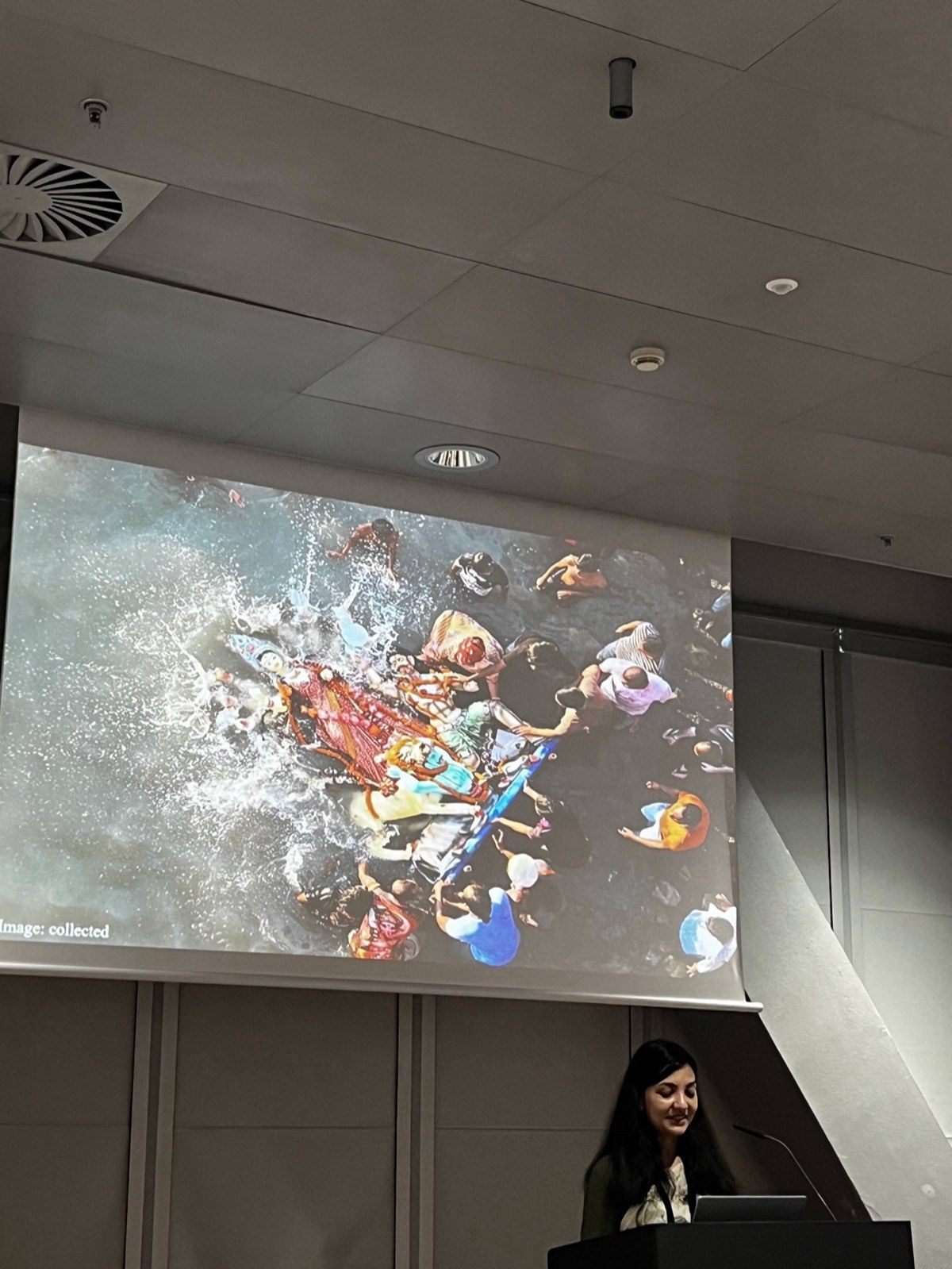
If the artifact were the point, the immersion would be an act of destruction. Nobody in Kumartuli treats it that way. The paper’s argument to HCI is that our field reads craft instrumentally, as a pipeline to output, while the artisans run on a different economy: devotion, obligation, collective care, knowledge passed hand to hand. The making carries the value. Next autumn they make her again.
Fascinating point of view, very different from my culture, where the goal of the craft is the object, and rarely the craft itself.
I am taking home two principles:
Give people the wheel, keep the engine. Structured influence beats both a locked box and a blank prompt field. Preferences, presets, conversation that gets compiled into the prompt. Transparency available on demand.
Design for the making, even when the outcome is free. If the system produces the artifact regardless, the affordances worth building are the ones that let a person shape it and feel the shaping. That deserves real screen space and real roadmap, and today it gets neither.